gamechampion54
Gaming has evolved dramatically over the past few decades, from simple pixel-based games to immersive, lifelike worlds powered by cutting-edge technology. What started as an experimental form of entertainment has now become a cultural phenomenon and a multibillion-dollar industry. Video games have not only redefined the entertainment landscape but have also created communities, inspired creativity, and transformed how we experience narratives. In this blog post, we will explore the rich history of video games, the technological advancements that have shaped them, the genres that have emerged, and the future of gaming.
The Early Beginnings: How Gaming Took Its First Steps
The origins of video games can be traced back to the 1950s, when early pioneers began experimenting with computers to create interactive experiences. One of the first examples of video gaming was “Tennis for Two,” created in 1958 by physicist William Higinbotham. This rudimentary game, played on an oscilloscope, allowed two players to control paddles and bounce a dot back and forth in a manner similar to tennis. While “Tennis for Two” was a novel experiment, it wasn’t until the early 1970s that video games gained significant attention.
In 1972, Atari’s release of “Pong” revolutionized the gaming world. “Pong,” a simple game simulating table tennis, was the first commercially successful arcade game. It introduced the concept of competitive gaming and the idea of playing video games in public spaces. The success of “Pong” led to the rapid proliferation of arcade games and established the foundation for the video game industry.
The Rise of Home Consoles: Entering the Living Room
During the late 1970s and early 1980s, home consoles began to emerge as a way to bring gaming from the arcades into people’s homes. The first of these consoles was the Magnavox Odyssey, released in 1972. While limited in capabilities and featuring basic, monochrome graphics, the Odyssey was a pivotal moment in gaming history. It allowed players to experience video games at home, marking the start of a shift from arcade-centric gaming to home entertainment.
However, it was the release of the Atari 2600 in 1977 that truly revolutionized the home console market. The Atari 2600 became one of the first widely successful home gaming systems, offering a variety of games that could be played on a television. Its cartridges, which allowed players to purchase new games rather than buy a whole new console, set the stage for the business model that would dominate the industry for years to come.
The early 1980s saw the rise of several iconic games that defined the home console experience. Titles like “Space Invaders,” “Pac-Man,” and “Donkey Kong” became household names, solidifying video gaming as a mainstream form of entertainment. Despite some setbacks, such as the video game crash of 1983, gaming would continue to evolve, eventually regaining its momentum and ushering in a new era.
The Golden Age: The Nintendo and Sega Rivalry
The mid-1980s marked the beginning of what is often referred to as the golden age of video gaming. Nintendo played a crucial role in this transformation with the release of the Nintendo Entertainment System (NES) in 1985. The NES introduced gamers to iconic titles like “Super Mario Bros.” and “The Legend of Zelda,” both of which became cornerstone franchises in the gaming world. These games offered more than just entertainment; they introduced the idea of deep, narrative-driven experiences that would come to define many of the most beloved games of all time.
The NES’s success also paved the way for the growth of the video game industry. For the first time, developers began to focus not only on gameplay mechanics but also on creating immersive worlds, memorable characters, and compelling stories. Nintendo’s approach to game design set the standard for generations to come, with its emphasis on fun, accessibility, and challenge.
As Nintendo continued to dominate the home console market, a rival emerged in the form of Sega. In 1989, Sega released the Sega Genesis (known as the Mega Drive in some regions), a 16-bit console that promised more advanced graphics and sound compared to its competitors. The Genesis introduced players to the speedy blue hedgehog known as Sonic, whose fast-paced gameplay became a hallmark of Sega’s console. The rivalry between Nintendo and Sega became a defining feature of the 1990s gaming landscape, with both companies pushing the limits of what home consoles could achieve.
The 16-bit era also marked the rise of other gaming genres. The fighting game genre, with titles like “Street Fighter II” and “Mortal Kombat,” became a major force in arcades and home consoles alike. Similarly, the role-playing game (RPG) genre began to gain widespread popularity, with titles like “Final Fantasy” and “Chrono Trigger” offering expansive worlds, intricate stories, and strategic combat.
The Transition to 3D Graphics: A New Dimension of Gaming
The 1990s ushered in a new era of gaming with the advent of 3D graphics. The release of Sony’s PlayStation in 1994 marked the beginning of the 32-bit era and was a game-changer for the industry. The PlayStation’s ability to render 3D environments in real time allowed developers to create more realistic and expansive worlds. One of the first major titles to showcase the potential of 3D gaming was “Gran Turismo,” which offered players a hyper-realistic racing experience that captivated audiences worldwide.
The mid-1990s also saw the release of the Nintendo 64, another key console that pushed the boundaries of 3D gaming. With iconic games like “Super Mario 64” and “The Legend of Zelda: Ocarina of Time,” the Nintendo 64 demonstrated the power of 3D graphics and set the standard for future gaming experiences. These games not only featured vast, open worlds but also introduced new gameplay mechanics, such as free-roaming 3D environments, which would become standard in future games.
Perhaps one of the most significant impacts of the 3D revolution was the rise of the first-person shooter (FPS) genre. “GoldenEye 007,” released for the Nintendo 64 in 1997, became a milestone for multiplayer FPS gaming, introducing players to the thrill of team-based combat in a 3D environment. The influence of “GoldenEye 007” is still felt in modern FPS games like “Call of Duty” and “Halo.”
The Rise of Online Gaming and Esports
The late 1990s and early 2000s marked the rise of online gaming. With the proliferation of broadband internet connections, multiplayer gaming became more accessible than ever before. Games like “StarCraft,” “Diablo II,” and “Quake” allowed players to compete against others over the internet, transforming gaming into a global social experience.
As online gaming grew in popularity, so did the competitive gaming scene, eventually giving birth to esports. Esports refers to organized, multiplayer video game competitions, often involving professional players and teams. In 2000, the first major esports event, the Cyberathlete Professional League (CPL), was held, and it marked the beginning of competitive gaming as we know it today.
The early 2000s also saw the rise of services like Xbox Live and PlayStation Network, which allowed players to connect with each other, download games, and engage in online multiplayer experiences. These platforms became essential for the growth of online gaming, offering players the ability to form communities, compete in tournaments, and enjoy social gaming experiences from the comfort of their homes.
The Indie Gaming Renaissance
While big-budget AAA titles continued to dominate the market, the 2000s also saw the rise of indie games—smaller, independently developed games often made by small teams or solo developers. With the rise of digital distribution platforms like Steam and Xbox Live Arcade, indie developers could release their games directly to the public without the need for major publishers or large budgets.
Indie games like “Minecraft,” “Super Meat Boy,” “Braid,” and “Limbo” introduced innovative gameplay mechanics and unique art styles that set them apart from mainstream titles. These games often experimented with new ideas and pushed the boundaries of what was possible in gaming, offering players fresh and engaging experiences that were often more creative and experimental than their larger counterparts.
The success of indie games has contributed to the diversification of the gaming industry. It’s not just about blockbuster titles anymore; indie games allow for greater variety in terms of genres, art styles, and storytelling, giving players access to a wider range of experiences. Indie developers have found ways to create deeply personal, emotionally impactful games that resonate with players in ways AAA games often cannot.
The Present Day: A Billion-Dollar Industry
Today, gaming is one of the largest forms of entertainment in the world, generating more revenue than both the film and music industries combined. With the advent of next-generation consoles like the PlayStation 5, Xbox Series X, and Nintendo Switch, gaming continues to push the limits of what’s possible in terms of graphics, performance, and user experience. The rise of cloud gaming services like Google Stadia and Xbox Cloud Gaming has made it easier than ever for players to access games without the need for high-end hardware, enabling gamers to play titles on a variety of devices, including smartphones, tablets, and PCs.
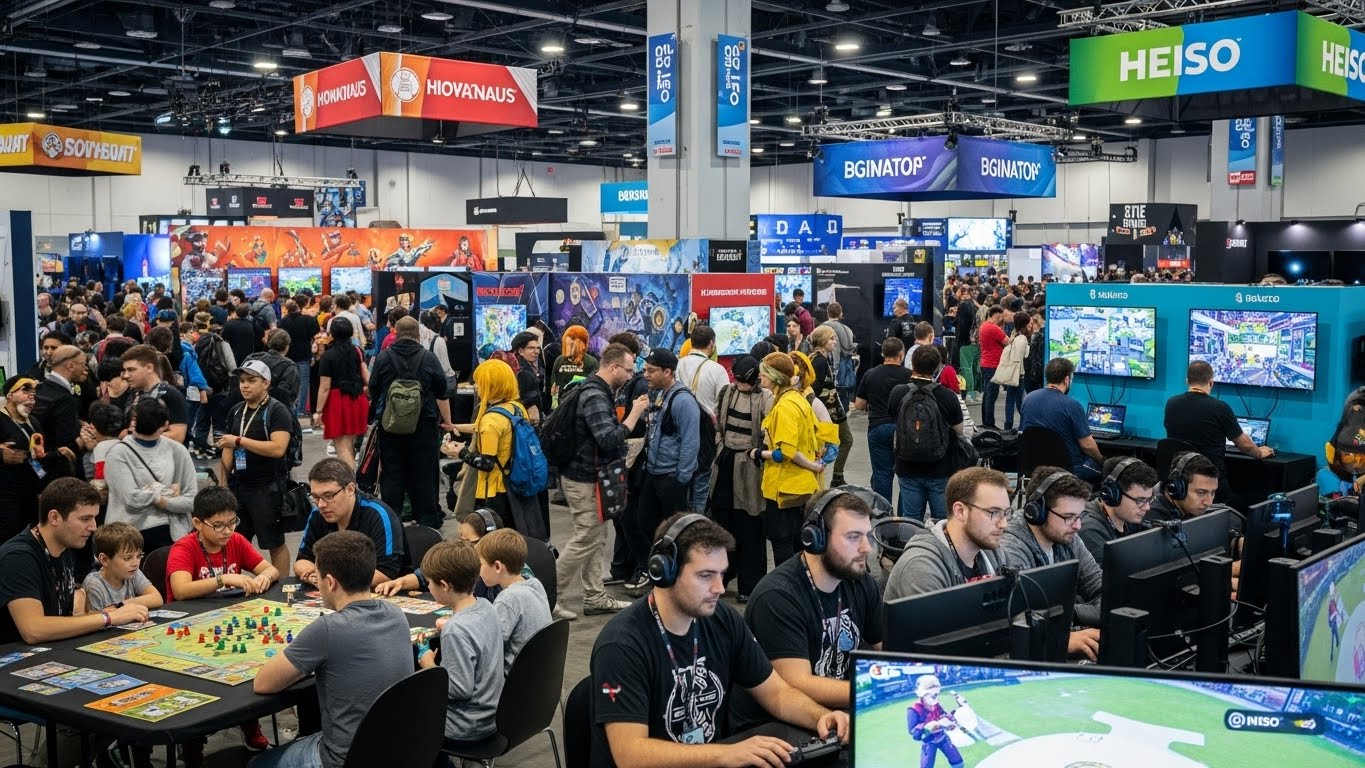
Esports has also grown into a global phenomenon, with massive tournaments like “The International” for “Dota 2” and “League of Legends” World Championships attracting millions of viewers worldwide. Professional gaming has become a legitimate career for many players, with top-tier competitors earning sponsorships, prize money, and a dedicated fanbase.
In addition to traditional gaming, streaming platforms like Twitch and YouTube Gaming have allowed gamers to share their gameplay with a global audience. Streaming has created a new form of entertainment, with professional streamers and influencers building massive followings by engaging with viewers, showcasing gameplay, and providing entertainment through live broadcasts.
The Future of Gaming: Immersive Technologies and Beyond
As technology continues to evolve, so too does the world of gaming. Virtual reality (VR) and augmented reality (AR) are poised to revolutionize how players experience video games, offering a level of immersion that was previously unimaginable. VR headsets like the Oculus Rift, HTC Vive, and PlayStation VR are already providing players with highly immersive experiences, while AR technologies like Pokémon GO have brought gaming into the real world in exciting ways.
Artificial intelligence (AI) is another area that is set to reshape the future of gaming. AI-powered NPCs could create more dynamic and responsive worlds, where every decision made by a player impacts the environment and narrative. AI could also be used to create procedurally generated worlds, offering endless possibilities for exploration and adventure.
Cloud gaming has the potential to democratize gaming, allowing players to access high-quality games without the need for expensive hardware. As internet speeds improve and latency decreases, cloud gaming could become the norm, allowing gamers to stream the latest titles directly to their devices.
Conclusion: The Unstoppable Force of Gaming
The world of gaming has come a long way since its humble beginnings, and it shows no signs of slowing down. From the arcades of the 1970s to the fully immersive experiences of today, video games have become a global cultural force that brings people together, sparks creativity, and redefines how we interact with entertainment. As technology continues to advance, we can only imagine what new forms of gaming and storytelling will emerge in the future.
Gaming has evolved from a niche pastime to a universal experience, and as the industry continues to grow, one thing is clear: the future of gaming is brighter than ever. Whether through groundbreaking innovations in technology or the rise of new, indie voices, gaming will continue to captivate and inspire for generations to come.