gamechampion54
Introduction
Games have been a part of human culture since the earliest days of civilization. From simple dice and stones used by ancient societies to the complex virtual realities we enjoy today, games have always reflected who we are. They represent our creativity, our desire for competition, and our instinct to explore new challenges. Whether played on fields, boards, or screens, games unite people of all ages and backgrounds in ways few other forms of entertainment can.
In the modern world, the word “game” no longer just refers to sports or board games. It has expanded to include video games, mobile games, and even virtual experiences that blur the line between play and reality. Gaming has evolved into a massive global industry, a social platform, and even a profession. But at its core, the essence remains unchanged: games are about fun, connection, and imagination.
The Ancient Origins of Games
Long before consoles and computers, humans were already playing games. Archaeologists have discovered ancient gaming artifacts dating back thousands of years. The Royal Game of Ur, found in Mesopotamia, is one of the oldest board games ever discovered, believed to be around 4,500 years old. Similarly, ancient Egyptians played Senet, a game that symbolized the journey of the soul through the afterlife. These early forms of play show that gaming has always been more than a pastime; it was also a reflection of beliefs, rituals, and society.
Even in ancient China, games like Go and Xiangqi (Chinese chess) became essential parts of culture, teaching strategy, patience, and discipline. In India, the game of Chaturanga, an ancestor of chess, was used to train military thinking. These early games combined fun with education, something that continues even in today’s digital titles.
The Rise of Modern Board Games
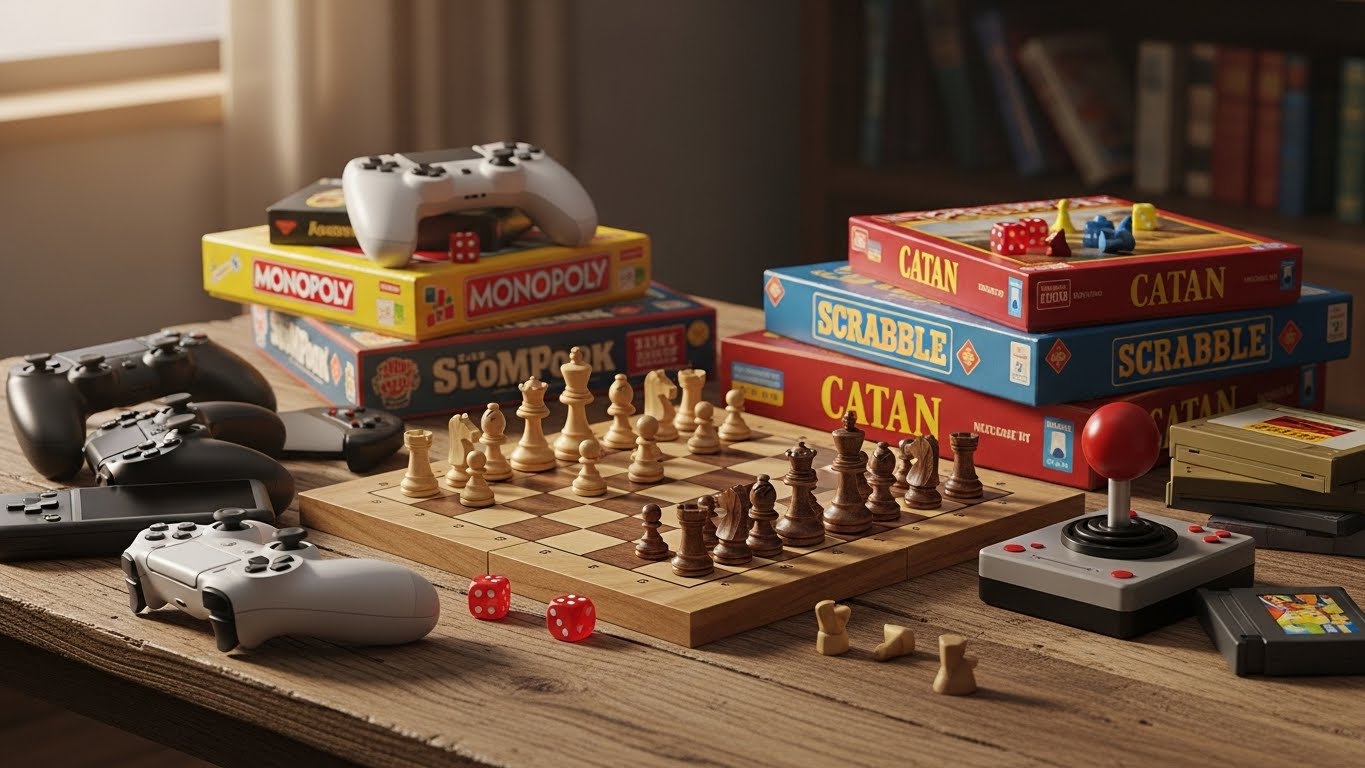
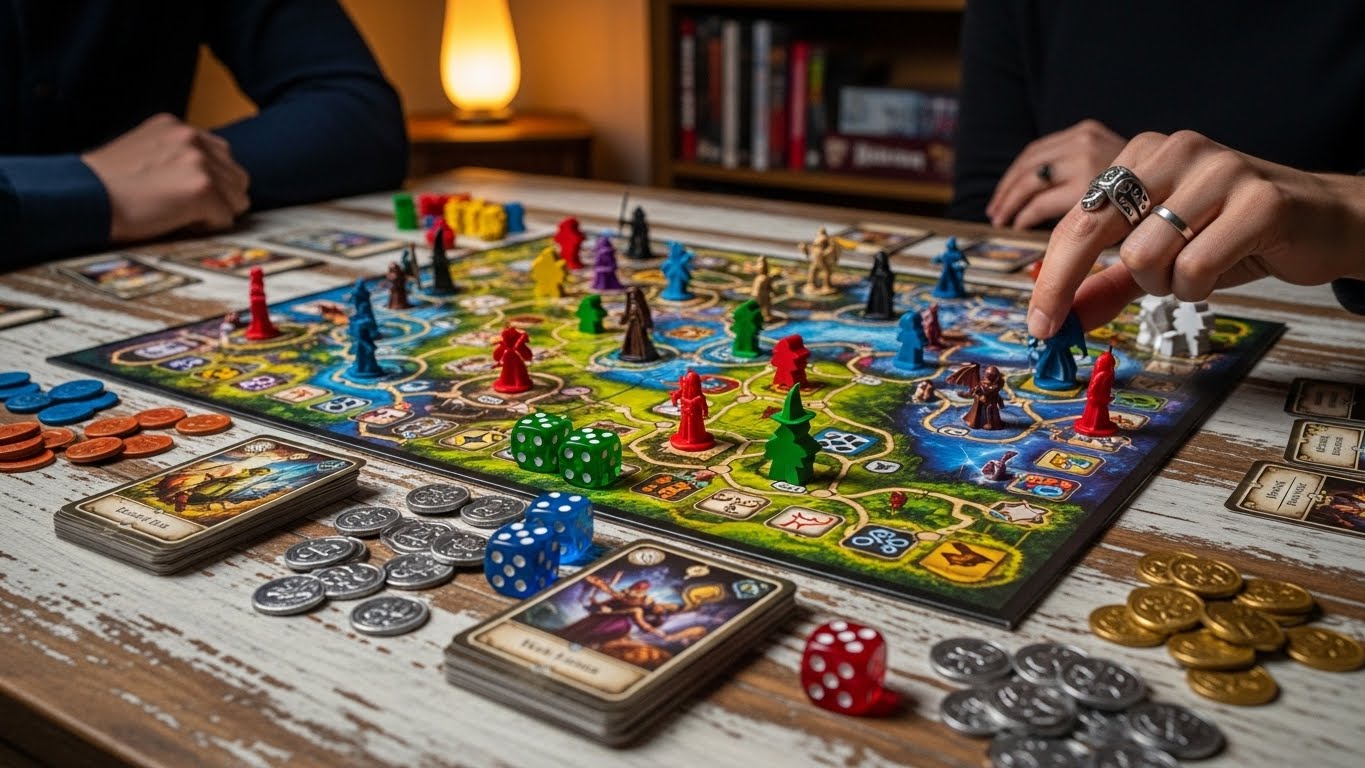
The modern board game era began in the 19th and 20th centuries, when games became a household activity. Titles like Monopoly, Scrabble, and Clue defined an entire generation of family entertainment. Board games encouraged face-to-face interaction, social skills, and creative thinking. They became tools for bonding, storytelling, and sometimes even competition among friends and families.
In recent years, board games have made a surprising comeback. Despite the dominance of digital media, people are turning back to tabletop experiences for the joy of in-person connection. Modern classics like Catan, Ticket to Ride, and Pandemic combine strategy, cooperation, and creativity, proving that physical games still hold a timeless charm.
Board games remind us that while technology evolves, the simple pleasure of sitting around a table, rolling dice, and laughing together never fades.
The Birth of Video Games
The mid-20th century marked the dawn of a new era — the digital age of gaming. What started as experiments by computer scientists soon became a cultural revolution. In the 1970s, arcade games like Pong and Space Invaders captured the imagination of players around the world. They introduced a new kind of challenge — fast-paced, visually exciting, and endlessly replayable.
Home consoles soon followed. The Atari 2600 brought video games into living rooms, transforming leisure time forever. The 1980s became a golden age for video games, as titles like Pac-Man, Donkey Kong, and Super Mario Bros. became global phenomena. These games not only entertained millions but also laid the foundations for the massive gaming industry we see today.
The Evolution of Console Gaming
As technology advanced, gaming consoles evolved at an incredible pace. From the early pixelated graphics of the 8-bit era to the hyper-realistic visuals of modern systems, each generation pushed boundaries. Companies like Nintendo, Sony, and Microsoft became the titans of the console wars, each introducing innovations that defined new eras of play.
Nintendo focused on creativity and accessibility, bringing joy to all ages with iconic characters and imaginative worlds. Sony emphasized cinematic storytelling and powerful hardware, offering immersive single-player experiences. Microsoft introduced online gaming at scale, connecting millions through Xbox Live.
The diversity in console gaming today means there is something for everyone — from epic adventures like The Legend of Zelda to fast-paced shooters, racing simulators, and relaxing life simulators. Consoles have become more than entertainment machines; they are gateways into entire digital universes.
The Revolution of PC Gaming
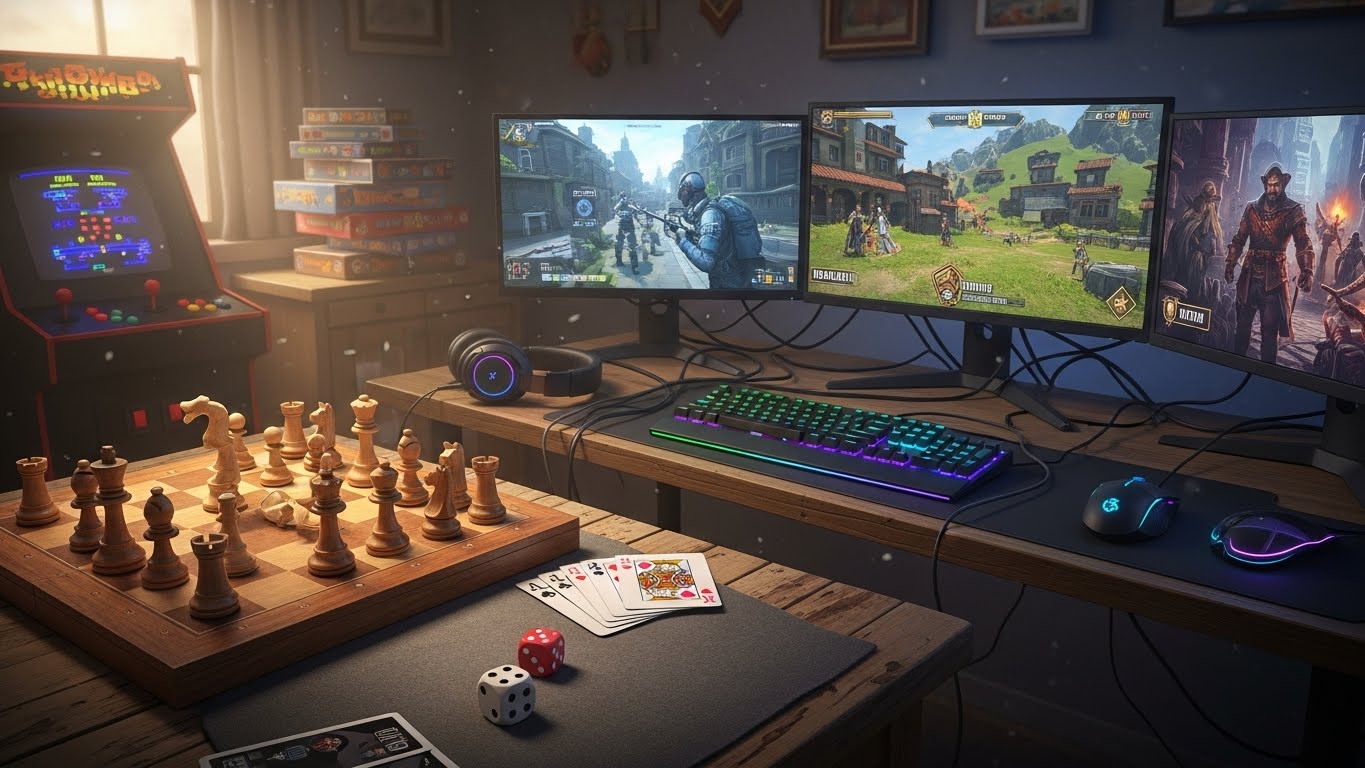
While consoles brought gaming to the masses, PC gaming became the playground for innovation and freedom. Computers allowed players to modify games, create new content, and push graphical limits far beyond what consoles could offer. Genres like real-time strategy, first-person shooters, and massive multiplayer online games found their roots in the PC scene.
Titles like Doom, StarCraft, and World of Warcraft changed the landscape of gaming. They not only defined genres but also built communities that lasted decades. PC gaming also played a vital role in esports, where professional players compete in tournaments watched by millions worldwide.
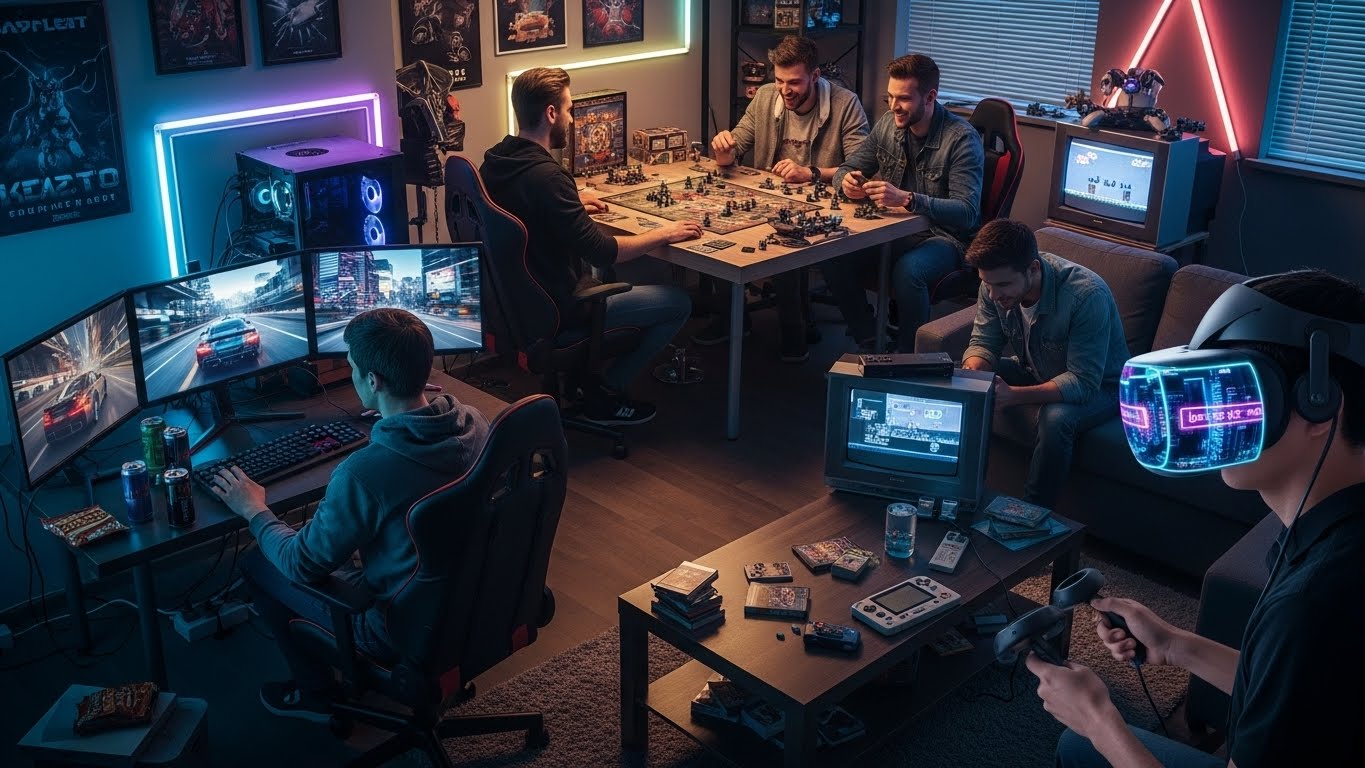
What makes PC gaming special is its flexibility. Players can customize their hardware, explore thousands of indie titles, and experience the latest technological advancements like virtual reality and ultra-high-definition graphics. It remains the most versatile platform for true enthusiasts who want total control over their experience.
The Explosion of Mobile Gaming
The rise of smartphones brought gaming into everyone’s pocket. Suddenly, millions of people who had never considered themselves “gamers” found themselves playing on their devices every day. Simple yet addictive games like Angry Birds, Candy Crush, and Clash of Clans became global sensations.
Mobile gaming democratized play. You no longer needed expensive hardware or complex setups; all you needed was a phone. It opened the door to casual gaming, where people could enjoy short bursts of entertainment anywhere and anytime. Over time, mobile games became more advanced, rivaling even console titles in graphics and depth.
Today, mobile gaming is one of the largest sectors of the entertainment industry. It connects people across countries, languages, and cultures. Whether waiting for a bus or relaxing after work, mobile games have become a universal pastime.
The Rise of Esports
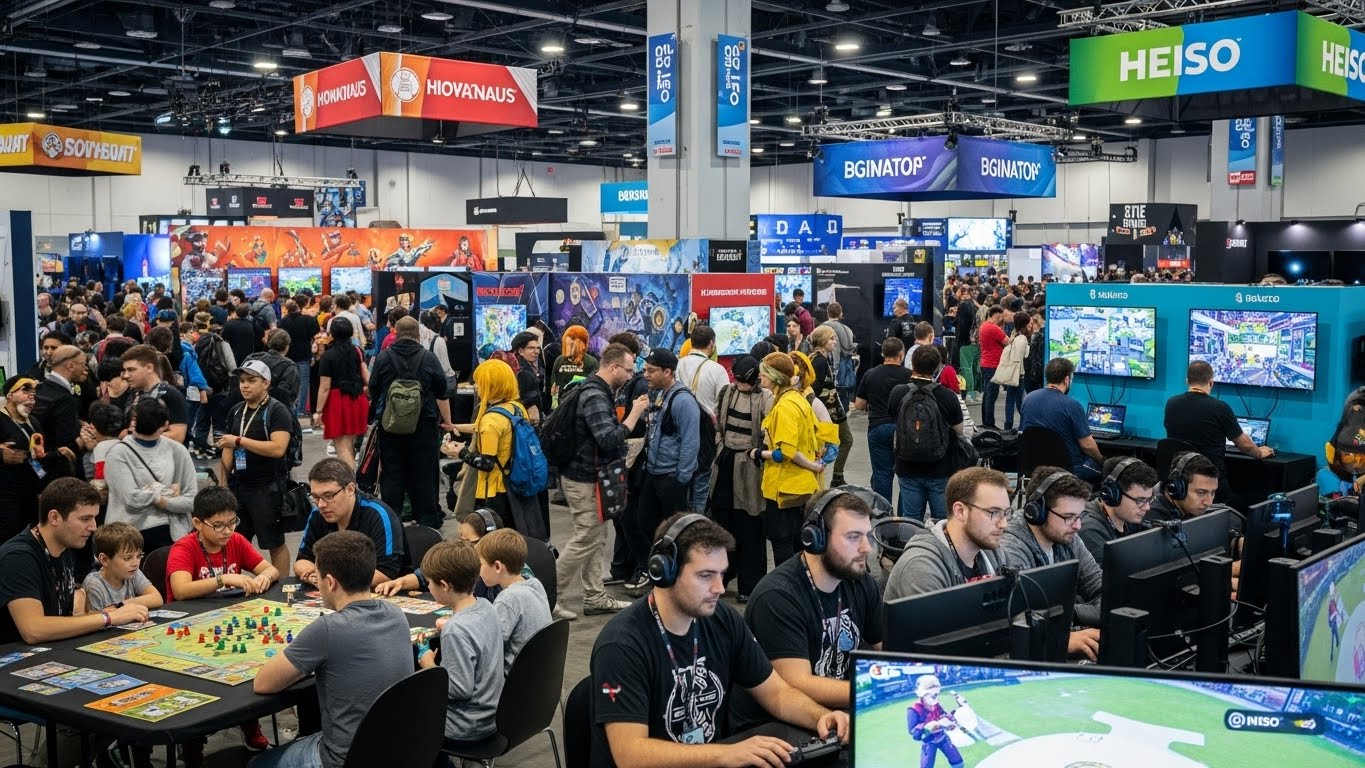
What was once a hobby has now turned into a global sport. Esports, or competitive gaming, has transformed the image of gamers from hobbyists to professional athletes. Games like League of Legends, Dota 2, and Counter-Strike have massive tournaments with millions of viewers and prize pools that rival traditional sports.
The appeal of esports lies in skill, strategy, and teamwork. Players dedicate years to mastering their craft, analyzing opponents, and performing under immense pressure. The audience, in turn, enjoys the thrill of high-level competition and the emotional intensity of close matches.
Esports has also given rise to new careers — shoutcasters, analysts, coaches, and content creators — building an entire ecosystem around competitive gaming. Stadiums are filled with fans, and live streams reach audiences across the globe. The line between sports and gaming is now thinner than ever.
Storytelling in Modern Games
In the early days, games were mostly about scoring points and beating levels. Today, they are immersive stories that rival movies and books in emotional depth and artistic expression. Developers now craft narratives filled with complex characters, moral choices, and breathtaking worlds.
Games like The Last of Us, Red Dead Redemption, and God of War show how storytelling can elevate gameplay into art. Players no longer just play; they experience. They become part of the story, shaping its outcome through their actions and decisions.
Story-driven games explore love, loss, identity, and survival. They allow players to walk in someone else’s shoes and understand perspectives beyond their own. This emotional connection is one of the reasons gaming has become one of the most powerful forms of modern storytelling.
The Social Side of Gaming
One of the most significant transformations in the gaming world is its social aspect. Online multiplayer games connect people across the planet, allowing friendships to form regardless of distance. Games like Fortnite, Minecraft, and Among Us have become virtual meeting spaces, especially during times when real-world interaction was limited.
Gaming communities thrive on shared experiences. Whether it’s teaming up for a mission, exploring an open world together, or simply chatting in-game, players create real relationships through play. For many, gaming is more than entertainment — it’s a social lifeline, a way to communicate, express themselves, and belong.
The Role of Technology in Gaming
Every major leap in gaming history has been fueled by technology. Graphics engines, artificial intelligence, motion sensors, and virtual reality have all transformed how we play. Today’s games feature lifelike environments, adaptive difficulty systems, and immersive sound design that respond to player actions in real time.
Virtual reality (VR) and augmented reality (AR) are pushing the limits of what games can be. Players can now physically move, interact, and experience worlds from a first-person perspective. Meanwhile, artificial intelligence creates smarter enemies and dynamic storylines that change with every decision.
The future of gaming lies in these technological frontiers. As hardware becomes more powerful and software more sophisticated, the line between reality and the virtual world will continue to blur.
The Artistic and Cultural Value of Games
For years, games were dismissed as mere entertainment, but today they are recognized as a legitimate art form. The combination of visual design, music, storytelling, and interactivity makes gaming one of the most complex and expressive mediums ever created.
Games inspire creativity not only in developers but also in players. They allow people to build, design, and create their own worlds, stories, and communities. Platforms like Roblox and Dreams turn players into creators, expanding what it means to “play.”
Beyond entertainment, games have influenced music, film, fashion, and even education. They are cultural touchstones that reflect the values and aspirations of modern society.
The Future of Gaming
As we look to the future, gaming continues to evolve in exciting ways. Cloud gaming promises to make high-quality titles accessible without powerful hardware. Artificial intelligence will make worlds more responsive, while virtual reality will bring full immersion. The rise of the metaverse — a shared digital universe — could redefine how we live, work, and play.
However, the heart of gaming will always remain the same: connection and creativity. No matter how advanced technology becomes, games will continue to bring people together through shared experiences, emotions, and imagination.
The Educational Power of Games
Games are no longer just for fun; they are tools for learning. Educational games teach mathematics, language, problem-solving, and critical thinking in ways that traditional methods cannot. Interactive learning captures attention and improves memory retention by engaging students directly.
Simulation games train pilots, doctors, and engineers by recreating real-world challenges in a safe environment. Even games designed purely for entertainment often teach valuable lessons — teamwork, strategy, patience, and empathy.
As schools and institutions embrace gamified learning, the potential for games to educate and inspire the next generation continues to grow.
The Psychological Impact of Games
Gaming’s influence on the mind is profound. On one hand, it provides relaxation, stress relief, and a sense of achievement. On the other, it can foster addiction or isolation if not balanced properly. Like any form of media, the impact depends on how it is used.
When played responsibly, games improve cognitive skills, hand-eye coordination, and problem-solving abilities. They encourage perseverance and creativity. Multiplayer games promote communication and teamwork. In many cases, gaming has even been used in therapy to help with anxiety, trauma, and rehabilitation.
Understanding gaming psychology is essential for creating healthier play habits and appreciating the deeper value of interactive entertainment.
Conclusion
Games have journeyed from ancient boards carved in stone to vast digital realms that span galaxies. They have shaped cultures, entertained generations, and created new forms of art and communication. Whether we play for fun, learning, or connection, games remain a mirror of human imagination.
In a world that changes every day, games continue to remind us of one simple truth — play is at the heart of being human. From the laughter of children in a playground to the intense focus of a gamer conquering a virtual challenge, the spirit of play unites us all. Games will continue to evolve, but their purpose will always endure: to bring joy, challenge, and connection to life itself.