gamechampion54
Gaming has come a long way since its humble beginnings in the 1950s. What started as simple pixelated graphics and basic mechanics has transformed into a multi-billion-dollar industry filled with immersive worlds, intricate stories, and highly sophisticated technology. In this blog post, we’ll dive deep into the evolution of gaming, explore how technology has shaped the gaming landscape, and look at what the future holds for this dynamic form of entertainment.
The Early Days: The Birth of Video Games
From Arcade Games to Home Consoles
The roots of modern gaming can be traced back to the late 1950s and early 1960s when universities and research institutions started experimenting with interactive electronic games. One of the earliest examples is the game “Tennis for Two,” created in 1958 by physicist William Higinbotham. It was a simple tennis simulation displayed on an oscilloscope, laying the groundwork for the concept of electronic entertainment.
However, it wasn’t until 1972 that the gaming world saw a true revolution. That year, Atari released “Pong,” an arcade game that became an instant hit and marked the first commercially successful video game. Pong’s simple yet addictive gameplay — a two-player game where players control paddles to bounce a ball back and forth — caught the public’s imagination. It quickly became a cultural phenomenon and the cornerstone of the gaming industry’s rise.
At the same time, home consoles began to emerge, starting with the Magnavox Odyssey in 1972, which allowed people to play video games in their own living rooms. Although the graphics were basic and the gameplay was rudimentary by today’s standards, it opened the door for future innovations in home gaming.
The Golden Age of Arcades
In the late 1970s and 1980s, arcade gaming became a dominant force in entertainment. With the release of iconic games like “Space Invaders” (1978), “Pac-Man” (1980), and “Donkey Kong” (1981), arcades became the social hubs for young gamers. These games introduced new mechanics, better graphics, and even included the concept of high scores, creating an environment of friendly competition.
During this era, the arcade experience was enhanced by the growth of coin-operated machines, and the gaming industry began to thrive. Kids and teenagers would spend hours at the arcade, immersed in pixelated worlds of space battles, maze chases, and jumping platforms.
The Rise of Home Gaming Consoles
The 8-Bit and 16-Bit Era
As the 1980s progressed, gaming consoles became more sophisticated. In 1983, the Nintendo Entertainment System (NES) was released and became the cornerstone of home gaming, providing a platform for legendary franchises such as “Super Mario Bros.,” “The Legend of Zelda,” and “Metroid.” The NES’s 8-bit graphics were a significant leap forward in terms of color and detail compared to previous home consoles, and it also introduced the concept of story-driven gameplay that would define much of modern gaming.
Following the NES, other consoles like the Sega Genesis (released in 1988) brought 16-bit graphics and faster processing power to the home gaming scene. The competition between Nintendo and Sega created a vibrant, competitive market, with each company pushing the boundaries of what consoles could do. During this era, games like “Sonic the Hedgehog” and “Street Fighter II” became household names.
The 3D Revolution and CD-ROM Gaming
The 1990s ushered in a new era of gaming: the 3D revolution. The release of the Sony PlayStation in 1994 marked a pivotal moment in gaming history, introducing a console capable of rendering fully three-dimensional worlds. Games like “Gran Turismo,” “Final Fantasy VII,” and “Metal Gear Solid” took full advantage of the PlayStation’s capabilities, offering expansive, immersive environments with complex narratives and innovative gameplay mechanics.
At the same time, the Sega Saturn and Nintendo 64 were also pushing boundaries, each with its own innovations. The Nintendo 64, in particular, introduced iconic games such as “Super Mario 64” and “The Legend of Zelda: Ocarina of Time,” which are still revered as some of the best games of all time.
The 1990s also marked the transition from cartridges to CD-ROMs. This shift allowed developers to incorporate higher-quality audio, full-motion video, and more expansive game worlds. This change significantly improved the overall experience and paved the way for more cinematic storytelling in games.
The Expansion of Online Gaming
The Dawn of the Internet Age
The late 1990s and early 2000s brought about the rise of online gaming, a transformative shift in the gaming industry. The ability to connect to the internet and play against friends and strangers alike opened up new opportunities for gamers. Games like “Warcraft” and “StarCraft” allowed players to compete in real-time over local networks, setting the stage for massive online multiplayer experiences.
With the introduction of broadband internet, online gaming flourished. In 2003, Blizzard’s “World of Warcraft” became one of the most successful and influential massively multiplayer online role-playing games (MMORPGs) ever released, drawing millions of players into a shared online world.
Consoles also embraced online gaming in the 2000s. The Xbox Live service, launched by Microsoft in 2002, allowed players to connect online through their Xbox consoles, enabling multiplayer experiences on games like “Halo 2” and “Gears of War.” The ability to play with friends across the globe, compete in ranked matches, and engage in voice chat was a game-changer for console gaming.
The Rise of eSports
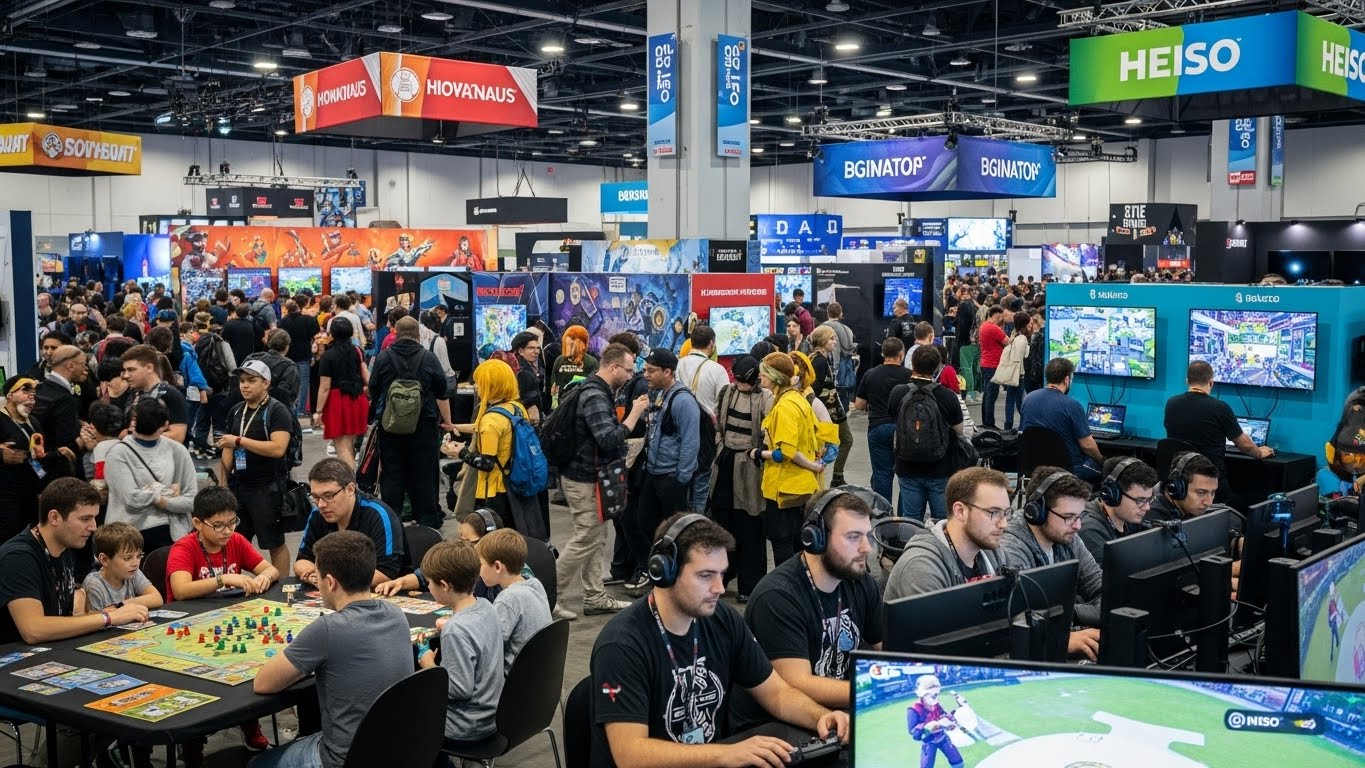
With the growth of online gaming came the rise of eSports — competitive gaming that involves organized tournaments and professional players. Games like “League of Legends,” “Counter-Strike,” and “Dota 2” became the focal points of this new competitive scene. Professional teams, sponsored by major brands and organizations, began competing in global tournaments with multi-million-dollar prize pools.
The rise of eSports has led to the establishment of professional leagues, dedicated arenas, and broadcasted events that are watched by millions worldwide. Some eSports competitions, such as The International for “Dota 2,” have prize pools that rival those of traditional sports, highlighting the growing prominence of competitive gaming in the global entertainment landscape.
The Current State of Gaming: A Global Phenomenon
The Dominance of Mobile Gaming
As smartphones became ubiquitous in the 2010s, mobile gaming exploded in popularity. Games like “Angry Birds,” “Candy Crush,” and “Pokémon GO” reached millions of players around the world, making gaming more accessible than ever. Mobile gaming allows players to enjoy quick, casual experiences on the go, and with advancements in smartphone hardware, even complex games like “PUBG Mobile” and “Call of Duty: Mobile” are able to run smoothly on handheld devices.
Mobile gaming has introduced new monetization models, such as in-app purchases and microtransactions, which have reshaped the way games are funded and marketed. While some players embrace these models, others argue that they’ve led to an overemphasis on monetization at the expense of game design.
Virtual Reality and Augmented Reality
As the gaming industry pushes further into the realm of immersive experiences, virtual reality (VR) and augmented reality (AR) have become increasingly prominent. With VR headsets like the Oculus Rift, PlayStation VR, and HTC Vive, players can step into fully realized virtual worlds and experience gaming in a way that was previously unimaginable.
Games like “Beat Saber” and “Half-Life: Alyx” have shown the potential of VR, offering highly immersive experiences that place players in the center of action-packed, three-dimensional environments. Similarly, AR games like “Pokémon GO” have combined gaming with the real world, encouraging players to explore their surroundings while interacting with virtual creatures.
Cloud Gaming: The Future of Gaming?
Cloud gaming, or game streaming, is another trend that is beginning to take hold. Services like Google Stadia, Microsoft xCloud, and NVIDIA GeForce Now are allowing players to stream games directly to their devices without the need for powerful hardware. By leveraging the power of cloud servers, these services promise to make high-quality gaming accessible to anyone with a stable internet connection, eliminating the need for expensive consoles or gaming PCs.
While cloud gaming is still in its early stages, it represents the future of gaming, where players can access their favorite games from anywhere, on any device. This technology could dramatically change how we think about ownership, hardware requirements, and the distribution of games.
The Future of Gaming: What’s Next?
Artificial Intelligence and Procedural Generation
As technology advances, gaming is poised to become even more sophisticated. Artificial intelligence (AI) is playing an increasingly important role in creating dynamic and reactive game worlds. In the future, we may see games that are entirely procedurally generated, where every playthrough is unique based on algorithms that adapt to the player’s behavior.
Games like “Minecraft” and “No Man’s Sky” have already embraced procedural generation, creating vast, open worlds filled with infinite possibilities. With AI-driven characters, stories, and environments, games could become more personalized and responsive, adapting in real-time to each player’s choices.
Integration with Other Forms of Entertainment
Gaming is increasingly becoming a cross-media experience. As more games are adapted into movies, TV shows, and books, the line between gaming and traditional entertainment continues to blur. Franchises like “The Witcher” and “The Last of Us” have been successfully adapted into television shows, creating a broader narrative universe that spans different mediums.